Predictive Attribution vs Last-Click in Influencer Marketing
Compare predictive attribution vs last-click in influencer marketing and learn how AI-driven attribution models help brands track real ROI and scale influencer performance.
January 16, 2026
Attribution has become one of the biggest bottlenecks in influencer marketing.
While brands invest more budget into creators every year, many still rely on last-click attribution to measure performance, a model that was never designed to capture how influencer marketing actually drives sales.
As a result, influencer campaigns are often undervalued, creators are misjudged, and budgets are misallocated.
This is where predictive attribution in influencer marketing changes the game.
Why Attribution Is the Core Problem in Influencer Marketing
Influencer marketing rarely works as a single-click conversion channel.
Creators influence purchasing decisions across multiple moments:
- Product discovery on TikTok or Instagram
- Consideration through reviews or Stories
- Validation via search, email, or retargeting
- Final purchase days or weeks later
Traditional attribution models struggle to capture this complexity, leading brands to underestimate true influencer impact and ROI.
What Is Last-Click Attribution (And Why Brands Still Use It)
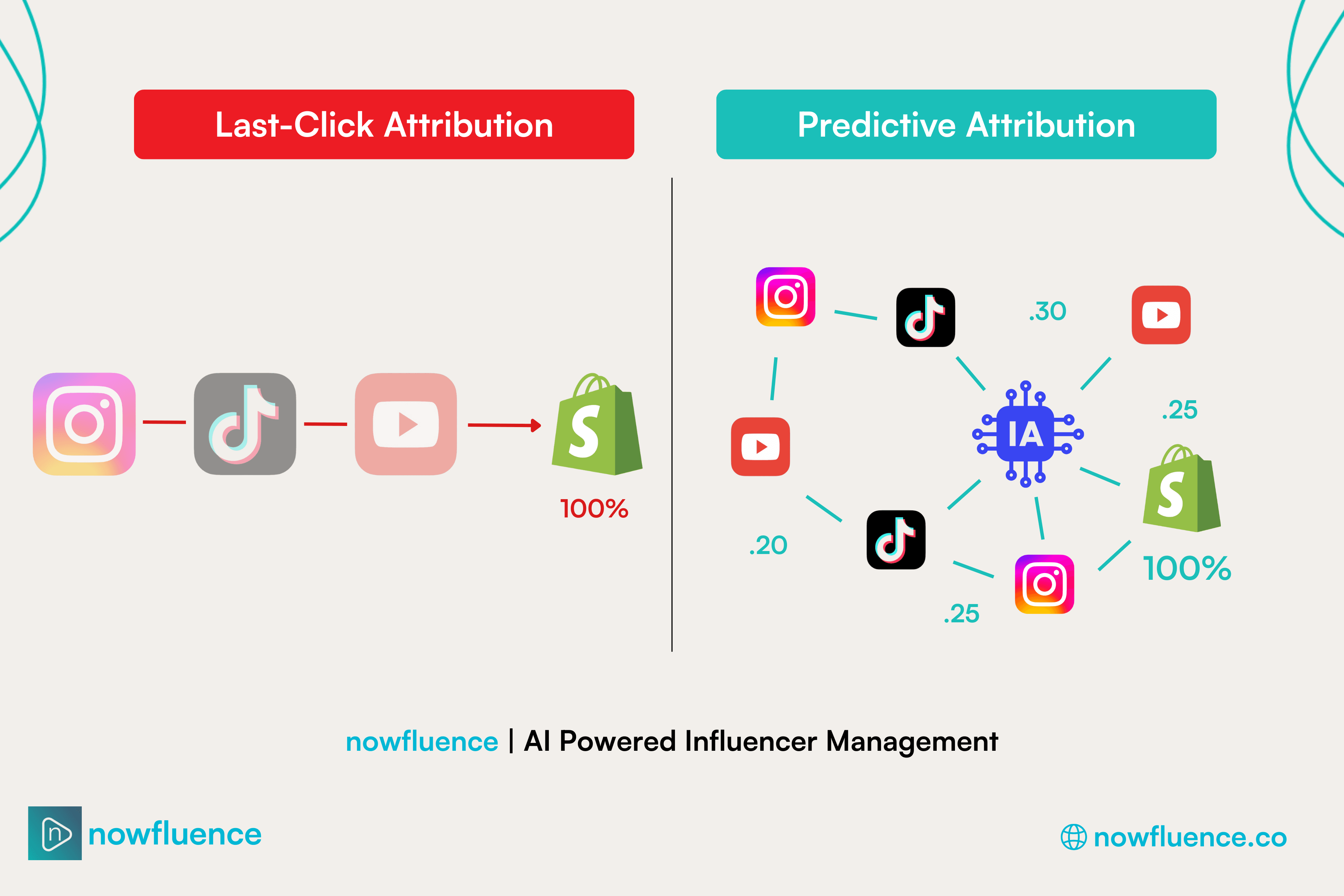
Last-click attribution assigns 100% of the conversion credit to the final touchpoint before purchase.
This model works reasonably well for paid search or retargeting ads, where intent is already high. But in influencer marketing, it creates a distorted picture.
According to attribution research, last-click models systematically ignore upper-funnel and mid-funnel impact, even though these touchpoints often drive the buying decision in the first place.
How Last-Click Fails Influencer Campaigns
In influencer marketing, last-click attribution creates four major problems:
1. Underreported Performance
Influencers spark demand, but conversions are credited elsewhere.
2. Creator Misalignment
High-impact creators look “unprofitable” on paper.
3. Budget Misallocation
Spend shifts toward channels that close, not those that influence.
4. Broken Scaling Decisions
Brands struggle to identify which creators deserve more investment.
A common scenario:
A TikTok creator drives awareness → user searches the brand later → purchase happens via Google or email → influencer gets zero credit.
This issue is widely recognized when comparing last-touch vs multi-touch attribution models.
What Is Predictive Attribution in Influencer Marketing?
Predictive attribution uses AI-driven models to estimate how much each touchpoint contributes to conversions, even when the conversion does not happen immediately.
Instead of asking “Who got the last click?”, predictive attribution asks:
- Which creators historically influence similar purchases?
- How do audiences behave after engaging with this creator?
- What conversion patterns emerge across campaigns?
This approach aligns closely with modern influencer attribution models and advanced marketing analytics research.
How Predictive Attribution Changes Influencer ROI
With predictive attribution, brands can:
- Forecast expected revenue before campaigns launch
- Identify which creators are likely to drive sales
- Optimize spend across creators instead of guessing
- Treat influencer marketing as a revenue channel, not an awareness experiment
This shift enables brands to make influencer decisions with the same confidence they apply to paid media.
Predictive Attribution for Shopify Brands
For Shopify brands, attribution accuracy directly impacts growth decisions.
Predictive attribution integrated with Shopify allows brands to:
- See real-time influencer ROI
- Attribute sales beyond last-click logic
- Understand creator-driven revenue without storing customer data
This approach preserves data privacy while unlocking actionable influencer marketing analytics.
When Brands Should Move Beyond Last-Click
Brands should consider predictive attribution when:
- Influencer spend is increasing quarter over quarter
- Campaigns span multiple platforms
- Creators are driving demand but not “closing”
- ROI reports feel disconnected from reality
At this stage, last-click attribution becomes a growth constraint rather than a measurement tool.
The Future of Influencer Attribution
The future of influencer marketing performance lies in AI-first attribution models.
As brands demand accountability and scalability, predictive attribution will replace static, click-based models, turning influencer marketing into a measurable, repeatable revenue engine.
Last-click attribution tells you who closed.
Predictive attribution tells you who actually drove the sale.
Want to discuss insights from this study? Reach out to our research team.